– Written by James Allen – Senior Tax Manager.
British agriculture has a strong tradition of practical problem-solving, and today’s AgriTech sector spans precision farming, controlled environment agriculture, livestock technology, crop protection, and data-driven decision systems. Innovation is frequently not about creating something entirely new, but about pushing what is technically achievable under variable weather, soil conditions, biological systems, and regulatory constraints.
To be deemed qualifying in accordance with CIRD 81910 (Corporate Intangibles Research and Development) manual and associated legislative guidance, the project / activities must attempt to achieve a technological / scientific advancement, whilst overcoming technological / scientific uncertainties, whilst simultaneously exceeding routine development and seeking to extend the overall capability within the entire field. The claimant should also be able to show that an appropriately skilled specialist in the area would not be able to reach a clear solution, or confirm feasibility, without carrying out investigative work such as trials, simulations, prototyping, or structured experimentation.
Many agricultural R&D projects surround around both feasibility and practical application of solutions, in terms of can the intended solution deliver consistent outcomes in real farm conditions, not just in controlled tests. Outdoor environments introduce uncertainty through seasonal variation, soil heterogeneity, disease pressure, and unpredictable weather. This is often where genuine technical uncertainty sits, particularly when moving from concept to a repeatable, scalable solution.
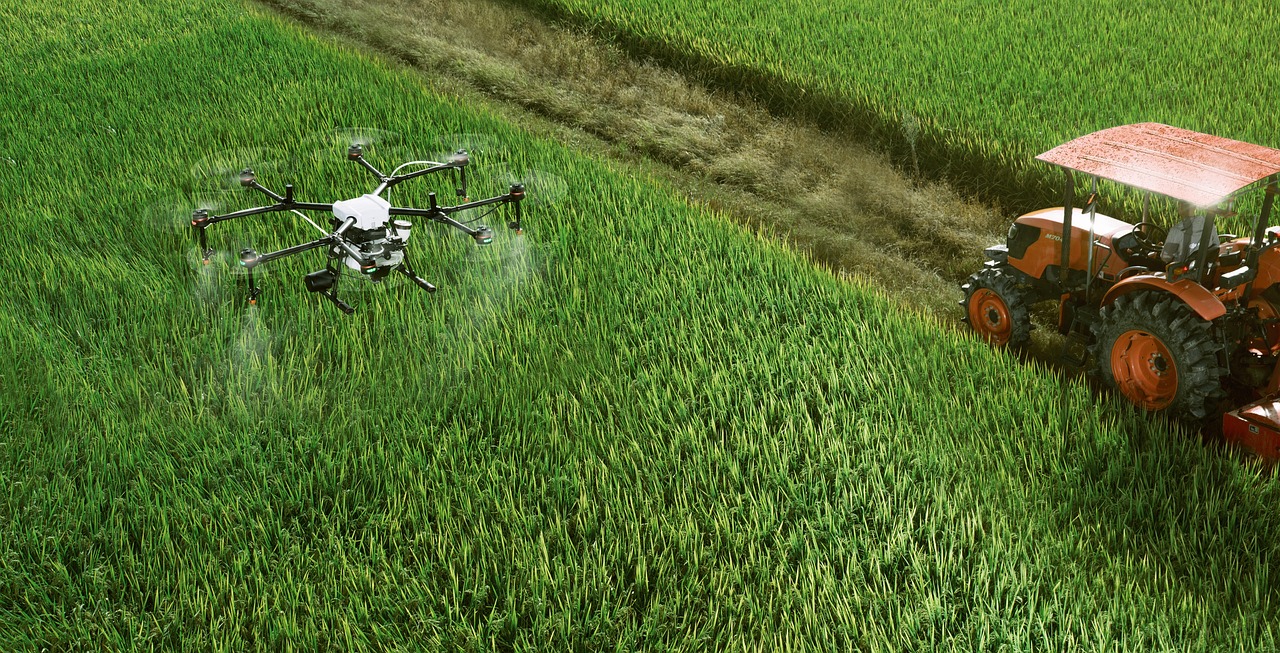
There are numerous activities which could potentially align with the R&D legislation and guidance, a select few include developing precision application / mechanical systems that can deliver fertiliser, herbicide, or biostimulants at variable rates whilst maintaining accuracy under changing terrain, wind conditions, and crop canopy density. Similarly, designing autonomous or semi-autonomous machinery for tasks such as weeding, drilling, or harvesting can involve significant uncertainty around perception accuracy, navigation, obstacle detection, safety performance, and reliable operation across different crop types and field conditions.
Additional examples of activities consist of structured breeding and experimental trial programmes undertaken to achieve stable multi-loci disease resistance within agronomically viable cultivars. Alongside also integrating complex morphological traits, such as upright three-dimensional habit, narrow core structure, controlled leaf serration and dimensional uniformity, to improve compatibility with mechanised harvesting, post-harvest processing and the development of new phenotypic indices.
A further common area is sensor and monitoring technology. This can include developing new approaches to measuring soil moisture, nutrient availability, animal health indicators, or crop stress, where signal quality is affected by biological variability, contamination, or environmental interference. Uncertainty can sit in calibration drift, data integrity, and ensuring the system produces actionable outputs rather than noise.
If you would like to arrange a meeting to discuss what opportunities there are for Agriculture / Agri-Tech businesses or any R&D services that Streets offer, please see the link below for the team’s Calendly. https://calendly.com/streets-innovation/r-d-tax-discovery-call